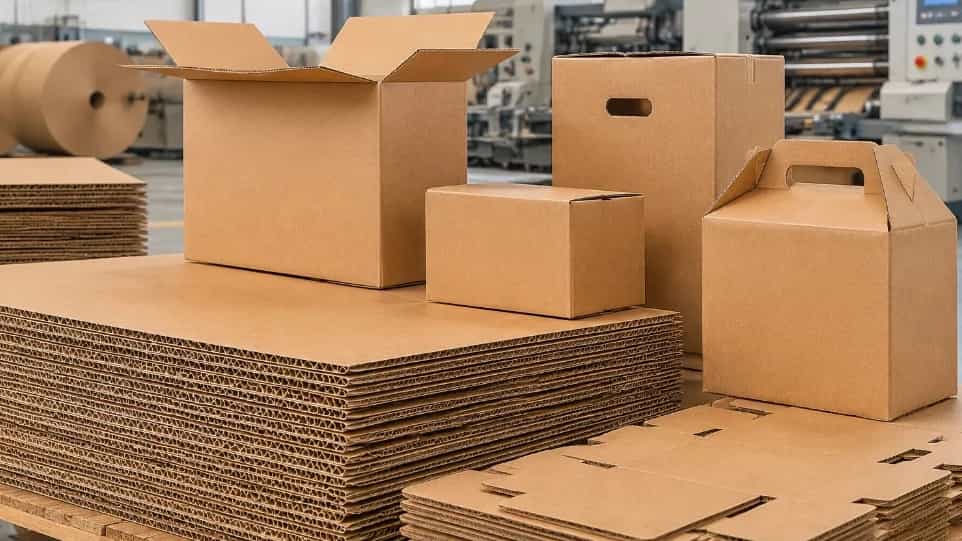
The price of packaging carton in Mashhad is the product of the formula of the sheet area consumed by the base price of each square meter of composite sheet (including kraft, flute and testliner) plus the side costs of the mold, cliché, type of printing and sheet-making waste. In the local market of the east of the country, the momentary fluctuation of the price of imported paper pulp and the actual grammage of the layers are the main parameters for changing the final tariff of the orders. Major buyers and industrial manufacturers adjust the final cost of each box dramatically by customizing the structure of the layers according to the weight of the product and determining the optimal circulation based on the size of the production lines.
Carton geometry and the effect of open sheet size on order cost
To derive the cost per carton, the first step is to accurately calculate the open surface or sheet area, not the dimensions of the closed box. Each standard four-door box (Mother or American carton model) needs extra padding, glue or stapled edges, and all-round edges of the doors.
In operational calculations, the smallest increase in box height or width increases the required sheet length by a standard factor. If your custom dimensions are not compatible with the width of the common rolls in the sheet-making lines of the province, the workshop will be forced to use a wider roll and produce excess waste in the production line; A hidden cost that will be transferred directly to the buyer's invoice. Matching the dimensions of the box with the opening of the routine sheets minimizes waste and balances the base price.
sheet structure composition; Technical comparison of single face, three layers and five layers
The cost of producing a box is more than seventy percent dependent on the type, weight and material of the cardboard sheet used in it. The wrong choice at this stage will either cause tearing and damage during the transportation of the goods or waste a lot of capital due to the consumption of excess cardboard.
Three-layer cardboard and its economic application
This material consists of two inner and outer liner layers with a middle layer. Three-layer cartons are the most sustainable and least expensive option for light to semi-heavy products, household detergents, plastic parts and intra-city distribution. The balance between resistance to vertical pressure and wall thickness has made this product the most popular order of light industries in Mashhad.
Five-layer carton and protection advantage for transit
Five-layer carton with two flute layers and three liner layers creates high mechanical resistance and impact resistance in warehouses with floor arrangement. This combination is used for car parts, installation materials, household appliances and especially for long-term export. The increase in the raw materials used in this sheet naturally increases the cost per square meter of the sheet, but the damage to the sensitive product is close to zero.
Single face for bumper packing
The two-layer single-face structure is mostly used as a protective wrapper, a floor covering or a separator for delicate industrial parts, and its finished rate is lower than rigid sheets due to the absence of a top liner.
The paper material of the layers and the difference in the quality of Kraft, Testliner and Irani
Two three-layer cartons with the same dimensions may have a significant difference in the final price. The main source of this problem is the type of paper fibers used in the layers.
Kraft paper produced from pure wood pulp has the highest tensile strength, resistance to moisture penetration and compatibility with cold storage. On the other hand, Testliner and Iranian recycled papers are the most optimal option for non-sensitive loads and fast distribution routes. In environments with low humidity, there is no need to use kraft in all layers; The clever combination of the upper layer of kraft with the lower layers of the test maintains the strength of the box and controls the cost of the material.
Effect of flute type on physical resistance structure
Floating or wavy layers are produced in different thicknesses and steps. B-type flutes are suitable for better print resolution and precision bending, while C-type flutes have higher vertical load strength and are used for palletizing. Choosing the type of flute does not create a significant direct cost on the paper, but its correct coordination with the packaging machines will prevent the quality of the edges from falling in high circulation.
Share of order circulation and amortization cost of setting up lines
Carton making is an industry based on continuous circulation and consumption. Each converting, flexo and gluing machine needs to spend time, adjust the blades and use the primary sheet for testing to adjust to a specific size and design.
In limited editions, this setup overhead is spread across a small number of boxes, driving up the cost per unit. As the circulation goes up to a few thousand, the cost of settings is practically zero and only the real price of paper, glue and printing remains. Ordering in the circulation according to the annual production planning is the most profitable decision in the inventory management of the packaging warehouse.
cutting process; Comparison of simple line and groove with diecut mold
The method of converting the flat sheet into a ready box is the next step in the cartoning bill. Boxes with classic openings and standard geometry are produced by line and chuck machines without the need for special tools; Therefore, no cost for the template is imposed on the customer.
On the other hand, keyboard boxes, handles, latch doors, showcases and boxes without staples need diecut molds. Mold making is done once and for all, but will be included as a separate invoice in initial orders. Using the existing formats of workshops in standard dimensions is a practical way to eliminate this stage of costs.
printing techniques; From industrial flexography to laminated boxes
The decision about the appearance of the carton has a direct effect on the final budget and should be chosen according to the position of the product in the final market.
Direct flexo printing
In the flexographic method, the water-based ink is transferred directly onto the cardboard sheet. The cost of making a gelatin mold and ink in this method is very economical, and it is the fastest and cheapest option for mother cartons, shipping and industrial storage.
Laminated posters and exquisite boxes
If there is a need for offset printing with high image quality and complex color spectrum, first the design is printed on thin cardboard and then glued (laminated) on the base sheet. In addition to the additional cost of the second cardboard and silicate glue, laminate requires additional steps such as cellophane coating or varnishing, which changes the price structure of the box compared to the simple flexo carton.
Special variables of Mashhad market and industrial supply in the east of the country
Geography and supply chain play an undeniable role in the financial balance of buyers. Mashhad is the center of production of food, saffron, dried fruit and leather and machinery industries in the east of the country.
Manufacturers who get their boxes from production centers inside the province like Milad Carton, benefit from the complete removal of heavy costs of intercity fare, reduction of waiting time for loading, and elimination of the risks of cardboard deformation in shipping routes. Also, the possibility of reviewing the quality control on the lines before packaging prevents damages caused by incorrect dimensions.
Executive and operational methods to optimize the carton budget
Carton cost reduction should never be done through unprofessional weakening of layers and risk of cargo breakage. Instead, using the following technical solutions curbs the cost without sacrificing quality:
- Integrating several different dimensions and turning it into a common mother carton size in order to increase unit circulation.
- Reducing the number of flexo printing colors from four colors to two colors without destroying the graphic structure of the brand message.
- Changing the arrangement of products inside the package to optimize the ratio of length and width and as a result to reduce the consumption sheet.
- Replacing staples with industrial thermal glue in light products to increase production speed and reduce Friction of sheets.