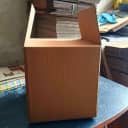

Supplying medical and health boxes in Mashhad is associated with certain challenges such as strict health standards, the need for high-quality printing and the need for immediate delivery to prevent interruptions in the production line of factories. As a direct producer in Mashhad, Milad Carton performs all the stages of design, printing and production of sanitary grade cardboard boxes without intermediaries to reduce the current costs of manufacturing businesses and pharmaceuticals in Khorasan.
Challenges of choosing packaging for pharmaceutical products
In the pharmaceutical industry, packaging is not only a protection; Rather, it is a vital tool to maintain product quality and comply with the rules of the Food and Drug Organization. Many producers in Mashhad face problems such as non-compliance of dimensions with filling machines, low quality of printing that makes the dose illegible, and the use of unsanitary cardboard when placing bulk orders. Our experience at "Milad Carton" shows that using regular gray cardboard for medicines is not only unprofessional, but it can cause the manufacturing license to be rejected by the competent authorities. Using ivory board with sanitary grade is the standard choice for this area.
Why should Mashhad producers work with direct producers?
Ordering intermediaries in the Mashhad packaging market increases the final price of the product by 30%. When you are in contact with Milad Carton factory as a direct manufacturer, you have complete control over the production process. This direct cooperation has several operational advantages: First, any changes in dimensions or design are immediately implemented in the production line, and the waiting time from sample to mass production is minimized. Second, access to offset printing technologies with herbal inks (Food-grade), which is necessary for health and pharmaceutical products, is only possible in equipped factories.
Technical specifications and sanitary box production standards
Medicine boxes must have special structural features so that they are not damaged during transportation and storage processes. At Milad Karton, we use cardboard weighing 250 to 350 grams to produce these boxes, which have the necessary resistance to stand on the pharmacy shelf. In the following table, a comparison of the most commonly used materials for pharmaceutical packaging is given so that you can make the right choice according to your product type:
Comparison table of pharmaceutical packaging materials
Cardboard type | Distinctive feature | Main application | Resistance |
|---|---|---|---|
Inderboard (Ivory) | White and very smooth surface | Expensive drugs/cosmetics | Very high |
Gray back | Economical price | Generic pharmaceutical products | Medium |
Kraft Hygiene | Eco Friendly | Natural Soaps/Creams | Top |
elimination of intermediaries; A solution to reduce packaging costs
Many pharmaceutical brands in Khorasan have problems competing with Tehrani brands due to high overhead costs. Our pricing strategy at Milad Karton is based on high circulation and elimination of middlemen. When you order directly from Cartonsazi, intercity transportation costs are eliminated and delivery time is minimized due to the proximity in Mashhad. In practice, we have observed that the close interaction between the carton design unit and the drug production unit leads to a 10% reduction in packaging waste in high-speed production lines; Because the boxes are designed exactly based on the mechanics of your device (Auto-bottom or Lock-bottom).
Procedures for placing orders and producing special boxes
The ordering process at Milad Kartan is completely transparent. After initial technical consultation and determination of exact dimensions, we send the prototype (Sample) for testing in your production line. After the final approval, printing is done using 5-color offset machines, and finishing operations such as cellophane coating, local UV (for more brand effect) and precise die-cut are done. We take into account the standards of the Food and Drug Organization in all stages, from choosing the type of cardboard to gluing the bottom of the box, so that the manufacturer does not have to worry about packaging permits.